Cryptocurrency markets move fast, and keeping up with price changes is essential for investors, traders, and beginners alike. One of the most useful tools for understanding market behavior is the xrp live chart. This real-time chart helps users track XRP’s price, volume, and trends as they happen.
Unlike static price tables, live charts show how the market reacts to news, regulation updates, and overall crypto sentiment. Whether you are holding XRP for the long term or trading it daily, understanding live chart data can help you make smarter decisions.
This guide explains XRP live charts in simple terms and compares them with other crypto charting tools, so you can clearly see their strengths and limitations.
What Is XRP and Why It Matters
Understanding XRP in Simple Terms
XRP is a digital asset created by Ripple Labs. It is designed to make cross-border payments faster and cheaper than traditional banking systems. Instead of taking days, transactions using XRP can settle in seconds.
How XRP Is Different from Bitcoin and Ethereum
- Bitcoin focuses on decentralization and store of value
- Ethereum powers smart contracts and decentralized apps
- XRP specializes in fast, low-cost global payments
Because of this unique use case, XRP often reacts differently to market news, which makes live chart tracking especially valuable.
What Is an XRP Live Chart?
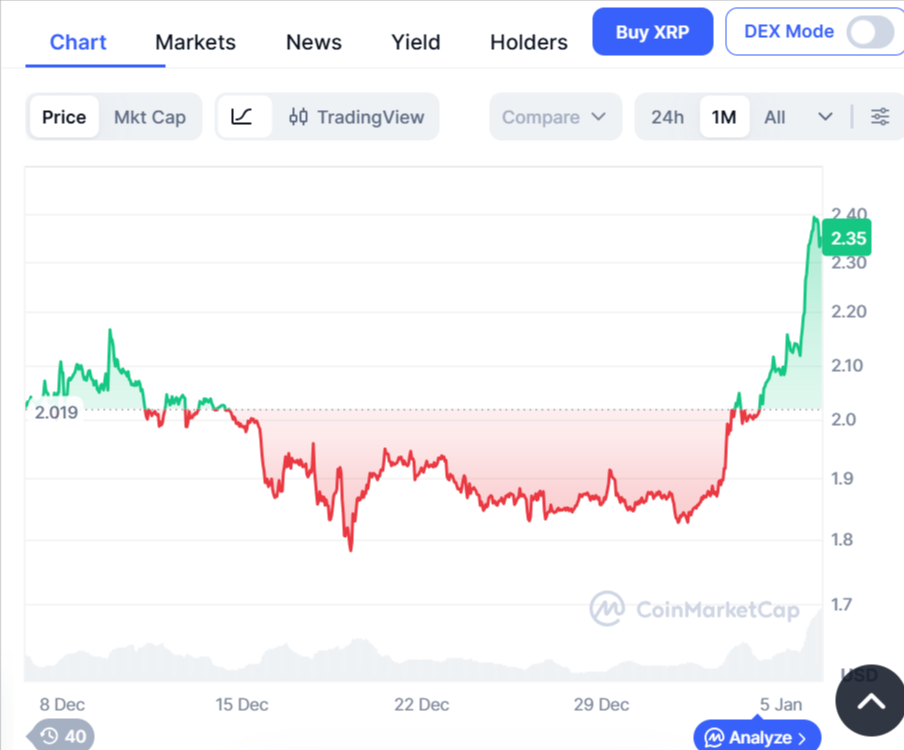
An XRP live chart is a real-time visual display of XRP’s price movement across exchanges. It updates every second and shows how buyers and sellers interact in the market.
Key Information Shown on Live Charts
- Current price
- Price changes over time
- Trading volume
- Market trends
The xrp live chart helps users see patterns instead of guessing based on numbers alone.
Core Elements of an XRP Live Chart
Candlestick Patterns
Candlesticks show opening price, closing price, highs, and lows within a time frame. Green usually means price went up, while red shows a drop.
Time Frames
You can view price movement by minutes, hours, days, or months. Short time frames suit traders, while long ones help investors.
Volume Indicators
Volume shows how much XRP is being traded. High volume often confirms strong price movement.
Why Live Charts Are Important for XRP Users
Live charts help users:
- Spot trends early
- Identify support and resistance levels
- Reduce emotional decision-making
- Compare XRP performance with other assets
Because XRP often reacts quickly to legal and regulatory news, real-time tracking is especially useful.
XRP Live Chart vs Other Crypto Charts
XRP vs Bitcoin Live Charts
Bitcoin charts are often more stable due to higher market dominance. XRP charts can be more sensitive to news and partnerships.
XRP vs Ethereum Live Charts
Ethereum charts show activity tied to network upgrades and gas fees. XRP charts focus more on payment adoption and legal clarity.
Comparison Table
| Feature | XRP | Bitcoin | Ethereum |
|---|---|---|---|
| Transaction Speed | Very Fast | Slow | Medium |
| Use Case | Payments | Store of Value | Smart Contracts |
| Volatility | Medium-High | Medium | High |
This comparison shows why XRP chart behavior often stands apart.
Best Platforms to View XRP Live Charts
Popular platforms include:
- CoinMarketCap
- CoinGecko
- TradingView
- Binance
These tools offer interactive charts and indicators. For beginners, CoinMarketCap is simple and reliable.
How to Read XRP Live Charts as a Beginner
Start With Price Direction
Look at whether the price is generally moving up, down, or sideways.
Avoid Over-Analyzing
Too many indicators can confuse beginners. Stick to basics like trendlines and volume.
Use Long Time Frames First
Daily or weekly charts reduce noise and make trends clearer.
Common Indicators Used with XRP Charts
- Moving Averages: Show average price trends
- RSI: Measures overbought or oversold conditions
- MACD: Helps spot momentum changes
These indicators help confirm what the chart already shows.
XRP Live Chart for Short-Term vs Long-Term Users
Short-Term Traders
- Focus on minutes and hourly charts
- Watch volume spikes
- Use stop-loss strategies
Long-Term Holders
- Track weekly and monthly charts
- Focus on overall trend direction
- Ignore small price fluctuations
Both benefit from understanding chart movement, but with different goals.
Advantages of Using XRP Live Charts
- Real-time accuracy
- Visual trend recognition
- Better timing for entries and exits
- Easy comparison with other cryptocurrencies
The xrp live chart is especially helpful during high-volatility periods.
Limitations You Should Know
- Charts cannot predict news
- Sudden market events can break patterns
- Overreliance may cause stress
Charts are tools, not guarantees.
Frequently Asked Questions (FAQs)
1. Is an XRP live chart accurate?
Yes, most charts pull real-time data directly from exchanges.
2. Can beginners use XRP live charts?
Absolutely. Many platforms offer simple views for new users.
3. How often does XRP price update?
Prices update every second or even faster depending on the platform.
4. Are XRP charts free to use?
Yes, most charting tools are completely free.
5. Can I compare XRP with other coins on one chart?
Yes, platforms like TradingView allow multi-asset comparisons.
6. Do charts guarantee profit?
No. Charts support decisions but cannot eliminate risk.
Conclusion: Is Tracking XRP Charts Worth It?
Tracking XRP through live charts gives users clarity, confidence, and better market awareness. While no chart can predict the future, understanding price movement helps reduce uncertainty. When combined with research and patience, live charts become a powerful part of any crypto strategy.

Henry Cross is a dedicated crypto writer and market researcher with over a decade of hands on experience in blockchain and digital assets. He focuses on simplifying complex topics while tracking fast moving trends across Bitcoin, altcoins, and emerging Web3 ecosystems. His work aims to help both new and experienced investors make informed decisions through clear analysis and practical insights.
Henry currently contributes to leading crypto platforms, where he delivers market breakdowns, price outlooks, and educational content. Over the years, his articles have appeared on several well known crypto media sites, building a reputation for reliable and easy to understand reporting. Alongside his writing, he shares beginner friendly guides and learning resources for readers who want to explore crypto without confusion.